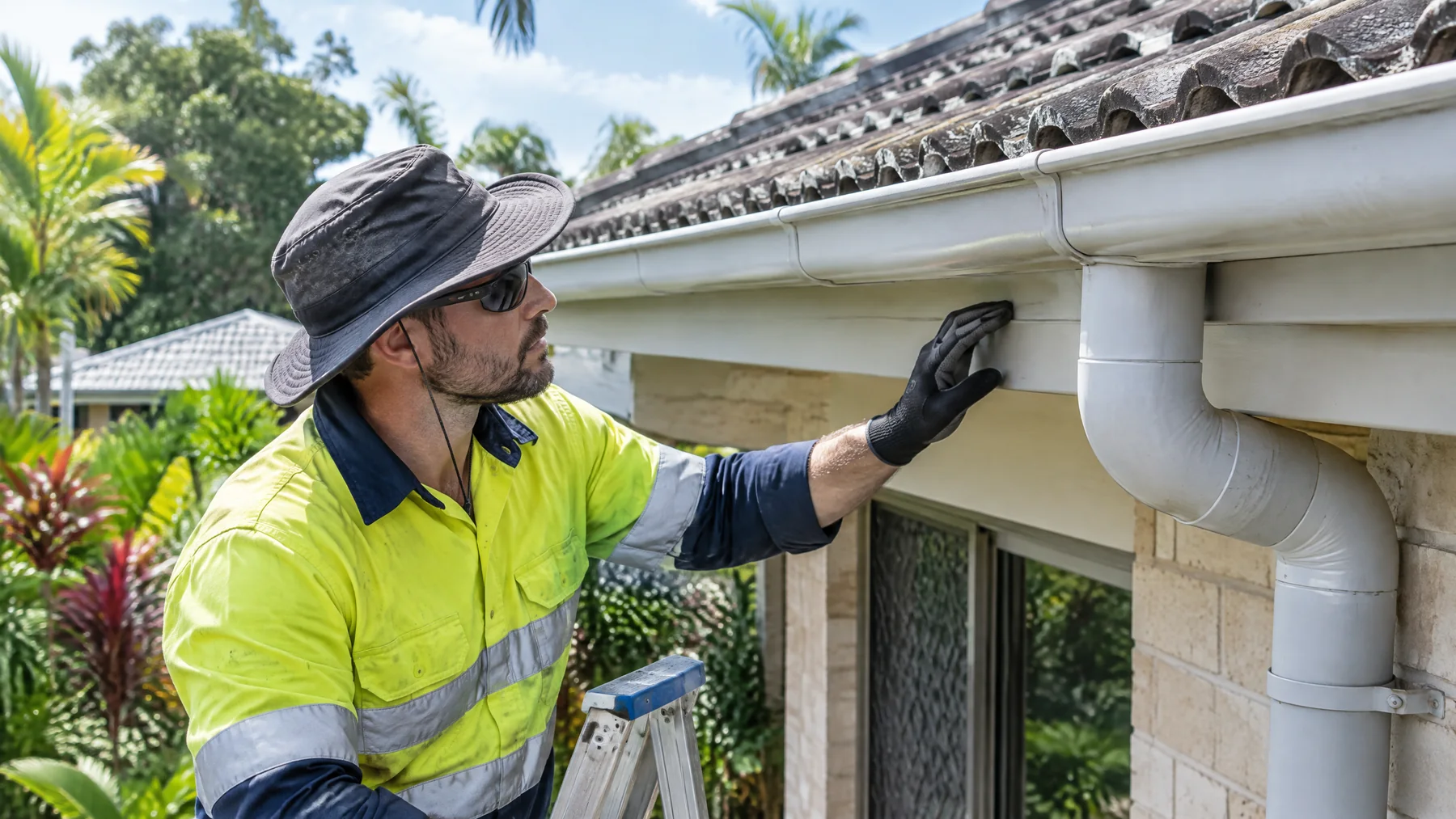
After a major storm, do not assume a roof is safe because no damage is visible from the street. Make careful observations from the ground and inside the building, and leave roof access to professionals.
Check people and immediate hazards
Stay away from fallen powerlines, unstable trees, loose roof material and sagging ceilings. If there is immediate danger, contact emergency services. Do not use a ladder or enter a roof space that may be unsafe.
Look for water and exterior changes
From safe positions, note missing or displaced materials, debris, gutter damage and new ceiling marks. Record the time and weather and take photos from a distance.
Contact the right professionals
Report urgent active water entry clearly to the roofing contractor and contact your insurer for claim instructions. Flood mapping and building safety concerns are separate checks from an assessment of roof damage.
Describe the roof concern to an independent professional.
Request a connection and discuss the property, quote and any next steps directly with the contractor.
Related services and suburbs
This article provides general information only. Roof conditions, safety risks, approvals and suitable work vary between properties; ask an appropriately qualified professional to assess your roof.