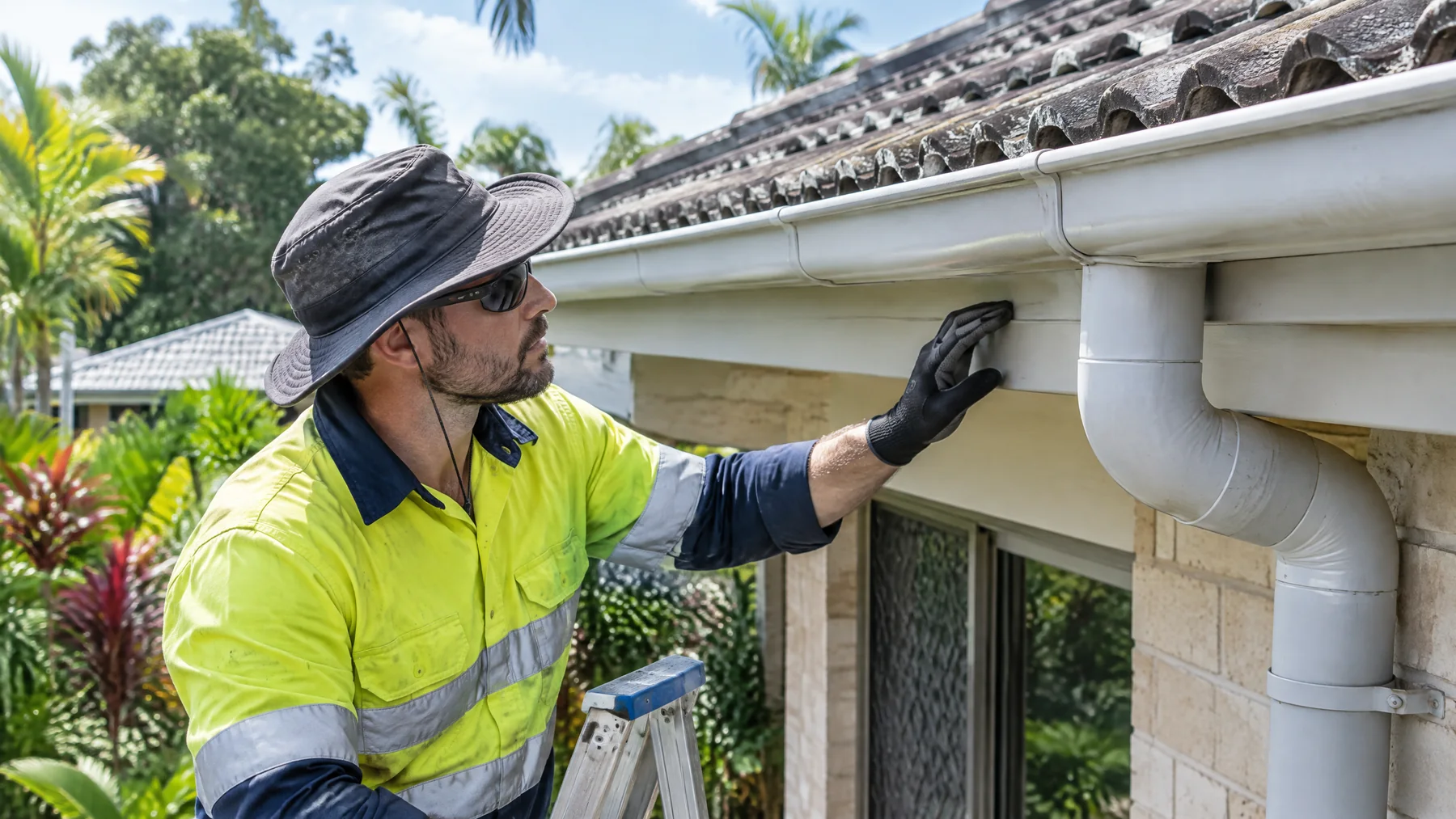
Storm damage can leave a roof unsafe before the full extent is visible. Protect people first, document what you safely can and arrange an assessment from a qualified professional rather than attempting a temporary repair at height.
Stay clear of hazards
Do not climb onto a wet or damaged roof. Keep away from fallen wires, unstable trees, sagging ceilings and loose roofing material. If people are in immediate danger, contact emergency services; a roofing enquiry is not an emergency dispatch.
Document the visible damage safely
Take ground-level photos of the building and any debris, record when the storm occurred, and note whether water is actively entering. Save relevant receipts and communications for your insurer, but follow the insurer's instructions about claims and repairs.
Arrange assessment and clarify the scope
When contacting a roofer, explain the suburb, observed damage, access issues and urgency. Confirm attendance, call-out costs and whether temporary weatherproofing is available before work begins; a permanent repair may need a separate visit.
Describe the roof concern to an independent professional.
Request a connection and discuss the property, quote and any next steps directly with the contractor.
Related services and suburbs
This article provides general information only. Roof conditions, safety risks, approvals and suitable work vary between properties; ask an appropriately qualified professional to assess your roof.